






The EB2 National Interest Waiver (NIW) is one of the few paths to a U.S. green card that does not depend on an employer. A qualified professional can file the petition on their own behalf, without a job offer and without the labor certification process. However, the EB2 NIW requirements are demanding, and U.S. Citizenship and Immigration Services (USCIS) applies them closely.
At Guerra Sáenz, PL, a Board Certified Coral Springs immigration lawyer leads a team that helps researchers, engineers, physicians, entrepreneurs and other professionals decide whether they qualify. This guide explains what USCIS looks for, how the process works and where petitions most often run into trouble.
What Is the EB2 NIW?
The EB-2 category is the second preference for employment-based immigrant visas. It covers professionals with an advanced degree and individuals of exceptional ability in the sciences, arts or business. In most EB-2 cases, a U.S. employer must offer a permanent job. The employer must also obtain a labor certification from the Department of Labor first.
The national interest waiver removes both of those conditions. Instead of relying on a sponsor, the applicant shows that their work benefits the United States as a whole. For this reason, the waiver appeals to scientists, doctors, founders and other professionals whose plans do not fit a traditional job offer.
Because the petition rests on the applicant’s own record and plans, preparation matters. Attorney Luis A. Guerra, the Managing Partner of Guerra Sáenz, PL, is a Florida Board Certified Specialist in Immigration & Nationality Law. In addition, the firm prepares its NIW petitions under his direction and legal supervision.
EB2 NIW Requirements at a Glance
USCIS reviews every NIW petition in two steps. First, the officer decides whether the applicant qualifies for the EB-2 category at all. Only then does the officer weigh the three-part national interest test. In short, the EB2 NIW requirements are:
- An advanced degree, or exceptional ability in the sciences, arts or business;
- A proposed endeavor that has substantial merit and national importance;
- Proof that the applicant is well positioned to advance that endeavor; and
- A showing that, on balance, waiving the job offer and labor certification would benefit the United States.
USCIS confirmed this two-step order in a January 2025 update to its Policy Manual. As a result, a petition fails if the applicant does not first qualify for the EB-2 category, no matter how strong the national interest argument may be.
Step One: Meeting the EB-2 Threshold
The first of the EB2 NIW requirements is basic EB-2 eligibility. An applicant can meet it in one of two ways.
Advanced Degree Professionals
An advanced degree is a U.S. academic or professional degree, or a foreign equivalent, above the level of a bachelor’s degree. For example, a master’s degree, a doctorate or a medical degree generally qualifies.
A bachelor’s degree followed by at least five years of progressive experience in the specialty also counts. USCIS treats that combination as the equivalent of a master’s degree. Letters from current or former employers must document the experience. In addition, foreign degrees often need a credential evaluation that shows their U.S. equivalent.
Individuals of Exceptional Ability
Applicants without an advanced degree may qualify through exceptional ability. USCIS defines it as expertise significantly above that ordinarily encountered in the sciences, arts or business. The applicant must meet at least three of these six criteria:
- An academic degree, diploma or certificate related to the field;
- Letters documenting at least ten years of full-time experience in the field;
- A license to practice the profession or a certification for the occupation;
- A salary or other pay that shows exceptional ability;
- Membership in professional associations; and
- Recognition for achievements and significant contributions from peers, government entities or professional organizations.
If a criterion does not readily apply to the occupation, comparable evidence may serve instead. However, meeting three criteria does not end the inquiry. USCIS then weighs all of the evidence together in a final merits determination. For that reason, our team reviews this step early, because a weak foundation can sink an otherwise compelling case.
Step Two: The National Interest Waiver Requirements
The remaining EB2 NIW requirements come from the precedent decision Matter of Dhanasar, 26 I&N Dec. 884 (AAO 2016). Under Dhanasar, USCIS may grant a national interest waiver when the applicant satisfies three prongs.
1. Substantial Merit and National Importance
The first prong focuses on the specific endeavor the applicant plans to pursue in the United States. It does not look at the occupation in general. The work may involve business, science, technology, health care, education, culture or another field.
USCIS looks at the endeavor’s potential prospective impact. Benefits limited to one employer or its clients are not enough. Likewise, a general statement about the value of a profession rarely satisfies this prong. Therefore, a strong petition describes a concrete plan and explains why it matters beyond one workplace.
2. Well Positioned to Advance the Endeavor
The second prong turns to the applicant. Officers consider education, skills, knowledge and a record of success. They also review the applicant’s plan for future work, the progress made so far and interest from customers, investors or institutions.
A degree alone does not satisfy this prong. On the other hand, an advanced degree in a STEM field, especially a Ph.D., is an especially positive factor under current USCIS guidance.
3. On Balance, a Waiver Benefits the United States
The third prong asks whether the country would benefit from waiving the job offer and labor certification. Officers consider whether labor certification would be impractical for the applicant. They also ask whether the applicant’s work would benefit the country even if qualified U.S. workers are available. Finally, they consider whether the national interest is urgent enough to justify the waiver.
A national shortage of workers in an occupation does not, by itself, meet this standard. In contrast, advanced STEM training combined with work in a critical and emerging technology is a strong positive factor.
Evidence That Supports the EB2 NIW Requirements
Strong petitions connect each requirement to independent evidence. Depending on the field, useful documents may include:
- Degrees, transcripts and credential evaluations;
- A detailed statement of the proposed endeavor and the plan to carry it out;
- Publications, citations, patents, grants or awards;
- Contracts, letters of intent or interest from investors, customers or institutions;
- Recommendation letters from experts with first-hand knowledge of the work; and
- Letters from government agencies or quasi-governmental entities, when available.
Not all letters carry equal weight. USCIS gives more weight to letters from recognized experts who know the work firsthand, especially when other evidence backs them up. Government letters are not required, but they can help with all three prongs.
Entrepreneurs face a particular hurdle. Broad claims about job creation or general economic benefit will not carry a petition on their own. Instead, founders should present a credible business plan, financial support and evidence of real traction.
How the EB2 NIW Process Works
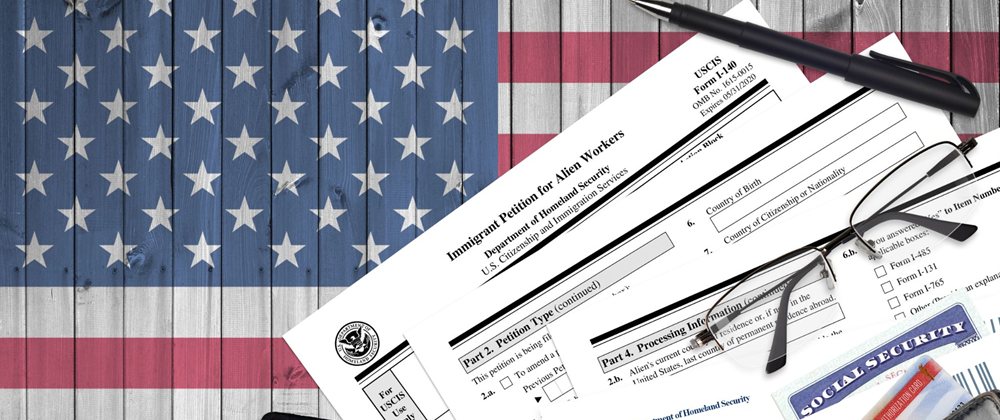
An NIW case is filed on Form I-140, Immigrant Petition for Alien Workers. Because the applicant may self-petition, no employer needs to sign it. The petition must also include a completed Form ETA-9089, Appendix A, and a signed Form ETA-9089 Final Determination, even though no labor certification goes to the Department of Labor.
Premium processing is available for NIW petitions. When an applicant requests it, USCIS aims to take action within 45 business days, as its premium processing page explains. A request for evidence, however, restarts that clock.
After approval, the applicant becomes a permanent resident through adjustment of status in the United States or an immigrant visa abroad. Timing depends on the applicant’s priority date and the monthly Visa Bulletin, since EB-2 green cards are subject to annual limits. When a visa number is available, an applicant in the United States may be able to file Form I-485 together with the I-140. A spouse and unmarried children under 21 may generally immigrate with the principal applicant.
Common Reasons NIW Petitions Fall Short
Many requests for evidence and denials trace back to the same problems:
- The proposed endeavor is vague, or it describes a job rather than a plan;
- The petition explains why the field is important, but not why the applicant’s specific work is;
- Recommendation letters are generic and lack supporting evidence;
- The applicant has not first established an advanced degree or exceptional ability; and
- An entrepreneur relies on projected job numbers without a credible plan or investor interest.
Each of these issues can usually be addressed before filing. A careful review of the record shows whether a case meets the EB2 NIW requirements today, needs more evidence or fits better in another category, such as EB-1A.
How Guerra Sáenz, PL Helps Clients Meet the EB2 NIW Requirements
Guerra Sáenz, PL is an immigration law firm in Coral Springs. It represents professionals, families and businesses throughout South Florida. Its NIW team combines legal judgment with hands-on experience in employment-based immigration and professional visas.
Attorney Luis A. Guerra leads the firm as Managing Partner. He graduated in the top 5% of his class from Nova Southeastern University’s Shepard Broad Law Center. He is also a member of the American Immigration Lawyers Association. Mr. Guerra came to the United States from Peru as a teenager and went through the immigration system himself. As a result, he understands what is at stake for every client.
Alexandra Morales, LL.M., focuses on employment-based immigration. Her work includes PERM labor certifications, national interest waivers, L-1A transfers and EB-1A petitions. She holds an LL.M. in American Law from Florida International University and an MBA from Nova Southeastern University.
Néstor J. Saldívar, M.Ed., is a paralegal who concentrates on EB-1A and EB-2 NIW petitions under Attorney Guerra’s supervision. He obtained permanent residence for himself and his family through the EB-2 NIW process. Today, he also teaches courses on the category.
Together, the team evaluates eligibility, shapes the proposed endeavor and gathers evidence. It also prepares the legal brief, coordinates recommendation letters and responds to any request for evidence. Clients can meet in person in Coral Springs or consult by video or telephone, in English or Spanish. Physicians may also find our guide to the physician EB2 NIW helpful.
Contact Guerra Sáenz, PL About Your EB2 NIW Petition
The EB2 NIW requirements reward careful preparation. If you are a researcher, physician, engineer, entrepreneur or other professional considering a national interest waiver, an early case evaluation can show whether your record is ready.
Contact Guerra Sáenz, PL to schedule a consultation with our Coral Springs immigration team. Call (954) 434-5800 or send us a message. Our office is at 3111 N. University Dr., Suite 429, Coral Springs, FL 33065.